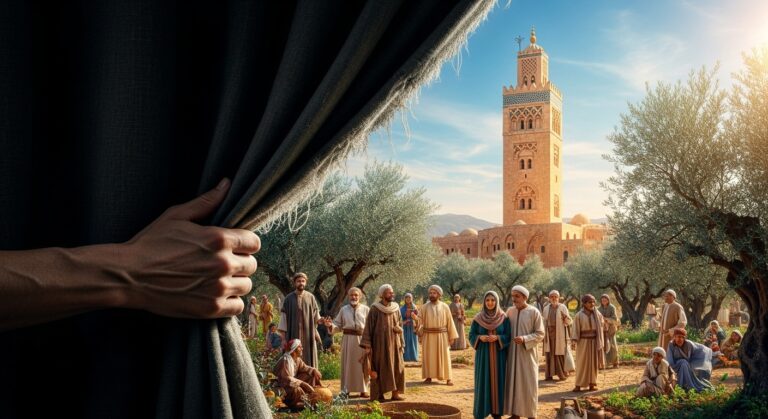
Let’s be real. We usually think of learning as something we do for a job, a promotion, or maybe just a fun new hobby. But guess what? In Islam, seeking knowledge isn’t just a nice option—it’s a spiritual must-do, a core act of worship, and the real foundation of a meaningful life. The link between the Quran and knowledge is super strong and non-negotiable, placing intellectual effort right up there with praying or fasting.
This guide is going to explore the powerful reasons why the Quran and the Prophet Muhammad (peace and blessings be upon him) made continuous learning a sacred duty. We’ll look at the roots of this idea, the practical steps involved, and the historical proof that Islam kickstarted one of the biggest learning movements the world has ever seen.
Why? Because of one powerful word: Read. Understanding this deep connection is key to appreciating the holistic wisdom in Islamic education and the lifelong journey it mandates. You’ll see why our tradition has so much expertise and trustworthiness when it comes to intellectual growth.
The Main Reason: Why Learning is Actually Worship
At its heart, the Islamic message ties knowing things to believing things. Seriously, how can you truly worship God without knowing His qualities, His creation, and what He wants from you? Learning is the necessary bridge between a shallow faith and a solid conviction you can truly stand on.
It All Started with “Iqra” (Read!)
The revelation of the Quran didn’t kick off with a command to pray or fast. It started with the word “Iqra”—which means “Read,” “Recite,” or “Proclaim.” This is huge! It puts the pursuit of Quran and knowledge as the most fundamental thing you can do as a believer.
The first five verses revealed to the Prophet Muhammad (peace be upon him) in the Cave of Hira laid it all out:
“Read in the name of your Lord who created, created man from a clinging substance. Read, and your Lord is the Most Generous, Who taught by the pen, taught man that which he knew not.” (Quran 96:1-5)
These short verses pack a punch about why we should learn:
- It’s a Command: Iqra is an active instruction, not just a suggestion. It demands that you constantly make an effort to absorb and analyze.
- The Right Way: Reading must be “in the name of your Lord.” Knowledge isn’t for showing off or exploiting others; it’s so you can better appreciate and serve the Creator.
- The Tools: God mentions teaching by the pen. That highlights the importance of books, writing things down, and studying things step-by-step—the backbone of school and academia!
This divine starting point instantly established knowledge as the main engine for human and spiritual progress. It tells us a Muslim’s faith needs to be smart and informed, not just blind guessing. The whole effort of reading and understanding is just built right into the essence of Iman (faith).

Knowledge is Your Ticket to Knowing God Better
The biggest goal of seeking knowledge in Islam is Tawhid—knowing that God is One. For a believer, every new discovery, observation, or scientific finding should lead straight back to a greater appreciation of the Creator’s perfection and power.
The Quran constantly fills up with verses urging us to look closely at the universe, not just as a bunch of natural stuff, but as a massive collection of signs (Ayat) pointing to God. For instance, the Quran asks us to think deeply about:
- The awesome way the heavens and the earth were made.
- The way night and day keep trading places.
- The water cycle and how plants grow.
- The amazing development of a human being inside the womb.
By studying things like astronomy, biology, and physics, a Muslim is essentially engaging in a very high form of worship. The scientist’s lab bench and the scholar’s study desk are equally good places to discover God’s majesty! This integrated view boosts the importance of every genuine field of learning, making science itself a spiritual journey wrapped up in the concept of Quran and knowledge. The more you learn, the humbler and surer your faith gets, because you realize how limited human knowledge is compared to Divine wisdom.
The Special Status of People Who Study
Islam gives a high rank to people who possess knowledge, putting them above those who don’t. This reinforces the idea that intellectual effort has huge rewards both now and forever.
The Quran makes it crystal clear: “Say, ‘Are those who know equal to those who do not know?'” (Quran 39:9) That’s a rhetorical question, and the obvious answer strongly affirms that people who learn are on a higher level. Knowledge is what sets them apart.
On top of that, scholars are described as the ones who truly stand in awe of God because their deep knowledge helps them grasp His power: “Only those fear God, from among His servants, who have knowledge.” (Quran 35:28) Here, ‘fear’ really means profound respect and awe, born from deep understanding, not just being scared.
The Prophet Muhammad (peace be upon him) even made the point stronger by saying that a scholar’s ink is more sacred than a martyr’s blood. That really shows how lasting the impact of education is compared to a fleeting sacrifice. This strong push encouraged early Muslims to prioritize education, build schools, and put up with hardship just to learn, making the tradition of Quran and knowledge academically driven right from the beginning.
Practical Commands for Intellectual Development
The spiritual value of knowledge wouldn’t mean much if there weren’t practical ways to go out and get it. Islam’s practical rules created a culture of lifelong, continuous learning that touches every part of a believer’s daily life.
You Have to Travel to Find Knowledge
Back in the day, seeking knowledge meant packing a bag and hitting the road—sometimes across huge distances. The Prophet Muhammad (peace be upon him) famously said something like, “Seek knowledge even if you have to go to China.” That saying, whether literal or just a strong phrase, captures the whole spirit: knowledge isn’t only in your backyard; it’s a treasure you have to actively hunt for, no matter how far away it is.
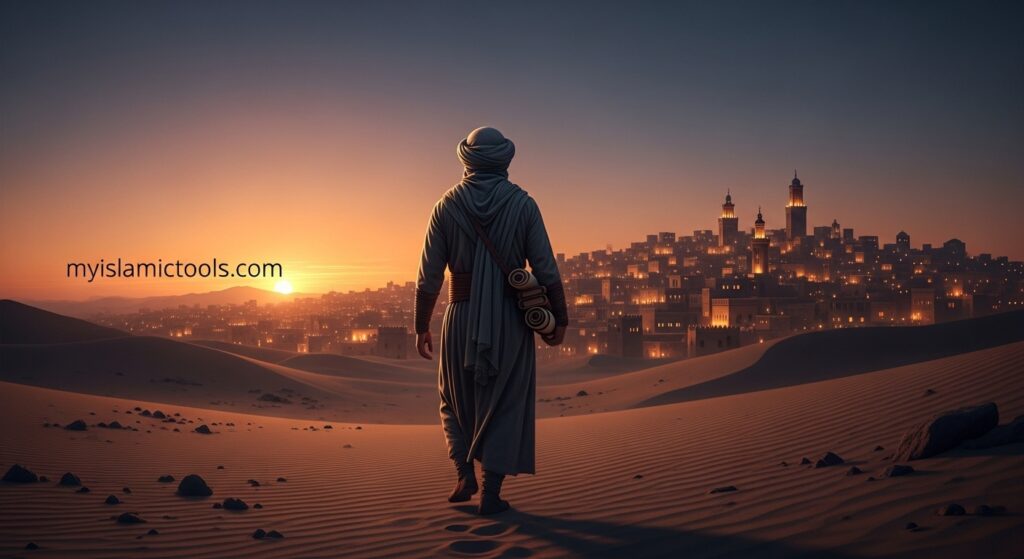
This command led to the amazing tradition of the Rihla fi Talab al-Ilm (The Journey in Search of Knowledge). Scholars would literally travel across continents—from Spain to Iraq, from Syria to Egypt—just to sit down with one master, verify a single narration, or learn one specific scientific concept. This practice:
- Created a Global Intellectual Scene: It pushed scholars to value learning from different cultures and regions.
- Demanded Rigor: The journey itself showed how serious and focused you had to be to make sure the information, especially religious texts, was accurate and authentic.
This history proves that chasing Quran and knowledge takes real physical effort, humility, and dedication, transforming intellectual pursuit into an adventure that crosses all borders.
Tafakkur (Contemplation) and Using Your Brain
The Quran often encourages believers to fully use their thinking caps, using verbs like yatafakkarūn (they reflect), ya’qilūn (they use their reason), and yatadabbarūn (they ponder deeply). These are commands to move past just seeing things, and to start actively, critically thinking about them.
Tafakkur (deep contemplation) is key to actually living the knowledge you gain. It’s how you mix raw information with spiritual truth. For example, you learn about gravity (science), but through Tafakkur, you realize the beautiful stability of the universe (theology).
This command makes sure Muslims aren’t just robots soaking up facts but are active, critical thinkers. They have to constantly analyze, ask questions, and look for deeper meaning in both the revealed book and the created world. This focus on reason is a vital part of the Quran and knowledge tradition, stopping people from just blindly following old habits or getting stuck in intellectual quicksand. Islam insists on a mindful, informed conscience.

Knowledge (Ilm) Must Lead to Action (Amal)
In Islam, knowing something is never the end goal; you have to put it to use. Knowledge (Ilm) without action (Amal) is like owning a fruit tree that never gives you any fruit. This ethical rule has massive implications for learning:
- High Responsibility: If you have knowledge, you have a huge moral duty to use it to make society better, teach others, and live by its rules. A doctor who knows medicine but won’t treat people is failing the Amal part.
- Sincere Intent: The reason you seek knowledge has to be sincere—to please God and serve people—not just to become famous, rich, or powerful. Scholars are constantly warned against getting a big head.
This connection ensures that learning is grounded in good ethics. The study of the Quran and knowledge provides the moral roadmap that steers scientific discovery and deep thinking toward justice, usefulness, and human well-being, keeping knowledge from turning destructive.
Types of Knowledge: Holistic Learning in the Quran and Knowledge Tradition
Because Islam is holistic, “beneficial knowledge” (Ilm Nafi’) covers way more than just religious law—it covers anything that helps humanity. Islam doesn’t believe in a fake divide between religious and “secular” education.
Revealed Knowledge (Ilm al-Wahy): The Ethical Roadmap
The most important knowledge is Ilm al-Wahy—the stuff that comes straight from the Quran and the Sunnah (Prophetic tradition). This acts as the ethical, legal, and spiritual compass for every other subject you study.
- Jurisprudence (Fiqh): The study of Islamic law, ethics, and how to perform rituals.
- Theology (Aqidah): The study of fundamental beliefs about God, prophets, and the next life.
- Exegesis (Tafsir): The detailed understanding and explanation of the Quran itself.
This foundation makes sure that no matter how much tech or science you advance, your ethical rules stay rock-solid. It gives you the “why” and “how to live” that gives purpose to the “what to build” in science. For anyone wanting to fully grasp the link between the Quran and knowledge, these religious sciences are essential.
Acquired Knowledge (Ilm al-Kasb): Science, Math, and Medicine
Ilm al-Kasb is all the hands-on knowledge you get through experience or study: math, astronomy, chemistry, engineering, medicine, and so on. Islam sees these as religious necessities, not just side subjects.
- Medicine: The Prophet Muhammad (peace be upon him) encouraged people to seek treatment and really stressed physical health. So, knowing medicine is actually a communal religious duty (Fard Kifayah).
- Engineering and Architecture: Building awesome mosques, clean water systems, hospitals, and infrastructure was a direct religious application of knowledge to serve the community.
- Mathematics: You needed advanced algebra and geometry to correctly figure out inheritance shares (Fara’id), Zakat (charity), and prayer times.
By saying that mastering these subjects is a religious duty, Islam removed any religious hesitation to jump into scientific research. This balanced approach is what powered the Islamic Golden Age. Scholars didn’t see any problem studying the stars (astronomy) and the Quran at the same time, because both were seen as sacred books written by the Creator. This comprehensive mandate is the most exciting part of Quran and knowledge.
Balance: Avoiding Dichotomies in Learning and Living
The ultimate goal in the Islamic tradition is to create a balanced person: someone who is both an alim (learned in religious matters) and a hakim (wise person/skilled professional) in worldly matters.
A true grasp of Quran and knowledge rejects the modern idea that religious scholars have to be clueless about science, or that scientists have to be clueless about religion. The ideal Muslim scholar, like the huge brains of the Islamic Golden Age (al-Razi, al-Khwarizmi, Ibn Sina), was often a master of both theology and an empirical science. This emphasis on balance stops intellectual arrogance and makes sure that scientific power is always guided by strong ethics, leading to a life with more meaning and peace. (If you want to read more about how this purposeful life helps you feel calm, check out our guide on Islam and mental health).
Historical Impact: The Islamic Golden Age as a Result of the Quran and Knowledge Ethos
That amazing time from the 8th to the 13th centuries, called the Islamic Golden Age, didn’t happen by accident. It was the direct, obvious result of the Quranic command to read, reflect, and learn universally.
Translation Movements and Saving Ancient Knowledge
The Abbasid Caliphate launched one of the most incredible translation projects ever, specifically because they followed the command to seek knowledge. With the government fully supporting them, scholars were paid really well to translate works from Greek, Persian, Indian, and Roman civilizations into Arabic.
- The House of Wisdom (Bayt al-Hikmah): Set up in Baghdad, this was the central hub for translation, research, and learning. It was the global center where works by Aristotle, Euclid, Galen, and Ptolemy were saved, studied, and improved upon. You can read more about this remarkable institution and its impact on Western civilization on external sources like Wikipedia’s entry on the House of Wisdom.
- Open to Everyone: This movement shows how open Islam is to learning—they didn’t care about your faith or where you came from. Truth was sought wherever it could be found, totally embodying the spirit of the Quran and knowledge without prejudice.
By translating and digging into these old texts, Muslim scholars not only saved them from being lost but also built new ideas on top of them, laying the groundwork for the European Renaissance later on.
The Rise of Universities and Libraries and the Quran and Knowledge Mandate
The Islamic world was a pioneer, creating the institutions that basically define our modern university system. The madrasa (school or college) grew into massive learning centers that offered structured classes, funding, and certificates (ijaza, which is like an academic degree today).
- Al-Qarawiyyin (Fez, Morocco): Started in 859 CE, this is often called the oldest university in the world that’s been running continuously and grants degrees. It proves the community’s commitment to the Quran and knowledge mandate. You can find more historical details on the official history of Al-Qarawiyyin.
- Al-Azhar (Cairo, Egypt): Founded in the 10th century, Al-Azhar is still one of the world’s most important learning centers today.
These places weren’t just religious schools! They were full blown centers teaching math, logic, medicine, and philosophy right alongside religious law. The huge number of public libraries also reflected the culture of the Quran and knowledge, making books accessible for everyone and boosting mass literacy.
Scientific Methodology: Watch, Test, and Prove
The Quran’s command to think deeply about God’s creation led to a huge breakthrough in science: the creation of the formal scientific method! Scholars like Ibn al-Haytham (Alhazen) were key in insisting that science must involve observation, controlled experiments, and verifiable results, pulling the field away from just guessing.
Ibn al-Haytham, in his amazing Book of Optics, is considered one of the founders of the modern scientific method. He insisted you must back up your theory with proof and testing. This systematic, hands-on approach came directly from the Quran constantly pushing people to look closely and reflect on the facts of the universe. For a closer look at how this scientific process works, this guide on the process of scientific inquiry is super helpful. The Muslim need for accurate prayer times, geographical directions (Qibla), and calendar dates led to huge advancements in math, astronomy, and mapping, proving that religious duty actually boosted, not stopped, scientific progress. The deep connection between the Quran and knowledge literally changed how humanity looks for answers.
Modern Applications: Keeping the Learning Going Today
That long-standing mandate for Quran and knowledge is still totally relevant right now. We live in a world drowning in data but starving for wisdom, and the Islamic tradition gives us a vital way to navigate all the modern intellectual noise.
Get Better at Critical Thinking and Staying Open-Minded
The Quran’s instructions to ya’qilūn (use your brain) and yatadabbarūn (ponder deeply) are basically commands to be a critical thinker. Today, this means:
- Don’t Be Gullible: Don’t take everything at face value, especially that crazy stuff you see on social media.
- Be Humble: Always remember that human knowledge has limits, even with all our tech. The smartest person is the one who knows how much they still don’t know.
- Talk Things Out: The Quran encourages respectful discussion with people who disagree (e.g., “Argue with them in a way that is best,” Quran 16:125). This builds maturity and keeps you open-minded, which is vital for today’s diverse world.
A believer who is grounded in the Quran and knowledge tradition approaches new ideas with a curious, analytical mind, ready to verify and integrate truth, no matter where it comes from.
Fighting Misinformation and Extremism with Real Knowledge
One of the most important things the learning mandate does today is fight religious extremism, which usually pops up when people are intellectually weak or misunderstand things. The best cure for fanaticism is always deep, well-rounded, ethical knowledge.
Extremists love taking texts out of context. Real scholars, who have deep knowledge of Arabic, history (Asbab al-Nuzul), law (Fiqh), and legal principles (Usul al-Fiqh), are the necessary force fighting back. The pursuit of Quran and knowledge becomes a kind of shield for the faith and the community, ensuring its rules are applied fairly, kindly, and accurately. The duty to learn stops the Muslim from being fooled by harmful, overly simplistic ideas.
The Lifelong Quest: From Your First Breath to Your Last
The Prophet’s famous saying, “Seek knowledge from the cradle to the grave,” confirms that education isn’t just for kids or for when you’re in school. It’s a lifelong, never-ending process.
This continuous learning model has some great benefits:
- Keeps Your Brain Young: It keeps your mind sharp, active, and relevant even when you’re older.
- Helps You Adapt: Since technology and society are always changing, the duty to learn means Muslims have to keep up with developments so they can keep helping humanity.
- Spiritual Boost: Constantly reading and thinking about the Quran keeps your faith fresh and stops it from becoming just a boring routine.
The whole concept of being a lifelong learner is baked right into the structure of Quran and knowledge, making sure the believer is always growing, improving, and adding something good to the world.
The Unending Journey of Learning
The deep connection between the Quran and knowledge is one of the coolest and most powerful things about the Islamic faith. Starting from the first word, “Iqra,” to the Prophet’s command to seek knowledge your whole life, Islam built a civilization on asking questions, deep study, and intellectual commitment.
The Islamic mandate simply rejects ignorance and celebrates the mind. It pushes believers to see the entire universe as a giant classroom, where every tiny atom, every star, and every historical moment is a sign you need to study, think about, and understand. Studying science, math, literature, and art aren’t distractions from your faith; they’re actually pathways to realizing how majestic the Creator truly is.
By fully embracing this tradition of continuous learning, Muslims are doing a primary spiritual duty. They become better citizens, better able to serve humanity, fight for justice, and find that ultimate satisfaction that comes from living a truly informed and meaningful life. This journey of seeking knowledge never ends, and for the believer, it guarantees rewards both here and in the hereafter.
Frequently Asked Questions (FAQs) About Quran and Knowledge
Does the Quran really say I have to study science and math, or just religious books?
That’s a super common question! And the answer is a huge Yes! The mandate for Quran and knowledge is holistic. Islam doesn’t draw a line between “religious” and “secular” knowledge. Any study that benefits humanity—like math, engineering, medicine, or coding—falls under the banner of Ilm Nafi’ (beneficial knowledge). Why? Because studying the laws of creation (science) helps you better appreciate the Creator, making it an act of worship. So, when a Muslim scientist studies physics, they’re fulfilling a religious duty just as much as a religious scholar is. It’s all connected!
Why is seeking knowledge called an “act of worship”? How does learning math count as praying?
Great point. It counts as worship because in Islam, sincere action is worship. Learning math, history, or anything else becomes an act of worship when your intention is right. If you study so you can: a) better understand God’s magnificent creation, b) avoid ignorance, or c) use that knowledge to serve humanity (like building a strong bridge or curing a disease), then it is rewarded. The effort, dedication, and time you spend are recognized by God, which is the definition of a rewarding act of worship! It puts the whole idea of Quran and knowledge into a spiritual context.
What’s the main difference between “knowledge” (Ilm) and just having a “skill” in Islam?
This is where the ethics come in. In Islam, Ilm (Knowledge) is the wisdom and understanding of principles, context, and purpose. Amal (Action/Skill) is the practical application. The Quran and knowledge tradition stresses that Ilm must lead to ethical Amal. For example, knowing how to build a bomb is a skill, but the knowledge that you shouldn’t use it to harm innocents is the moral Ilm. Knowledge gives your skills moral direction and responsibility, making sure you use your talents for good.
If the Quran encourages learning so much, why did the Islamic Golden Age eventually end?
That’s a classic historical debate! Historians usually agree it wasn’t one thing, but several complex factors. Things like political fragmentation (the caliphates broke up), internal conflicts, economic shifts, and devastating external invasions (like the Mongols destroying Baghdad’s libraries) all played a role. However, the core concept of Quran and knowledge didn’t end. Even today, the passion for seeking knowledge continues globally, even if the centralized resources of the past declined. The tradition survived the fall of empires.
I feel too old or too busy to learn new things. Does the concept of Quran and knowledge apply to busy adults?
Absolutely, yes! The Prophet Muhammad (peace be upon him) told us to “Seek knowledge from the cradle to the grave.” That means education is a non-stop, lifelong quest, not just something you do in school. For busy adults, this could mean dedicating 15 minutes a day to reading, learning a practical new work skill, or just spending time reflecting (Tafakkur) on what you already know. The size of the knowledge doesn’t matter; the continuous, sincere effort does. The mandate of Quran and knowledge applies to every stage of life.
How do I practically start seeking Quran and knowledge when I don’t have a formal teacher or school nearby?
Start small! The foundational command is Iqra (Read!). You can start by dedicating 15 minutes every day to: 1) Reading the translation and simple explanation (Tafsir) of a few verses of the Quran, or 2) Reading a biography of a historical scholar to gain wisdom, or 3) Taking a free online course on a topic you know will benefit you or your community. The key is consistency (Istiqamah). The journey of Quran and knowledge doesn’t require a formal institution; it requires a disciplined heart and mind.
How does having more Quran and knowledge help me be a better person and citizen in my community?
The ethical component of Quran and knowledge forces you to be responsible. When you understand your civic and social duties through learning, you are better equipped to act justly. Knowledge helps you: understand complex issues before judging, serve those in need more effectively, and contribute skills (like engineering or medicine) that lift the whole community. It gives you the wisdom (hikmah) to solve problems instead of creating them, fulfilling the ethical mandate of using your learning to benefit all people.